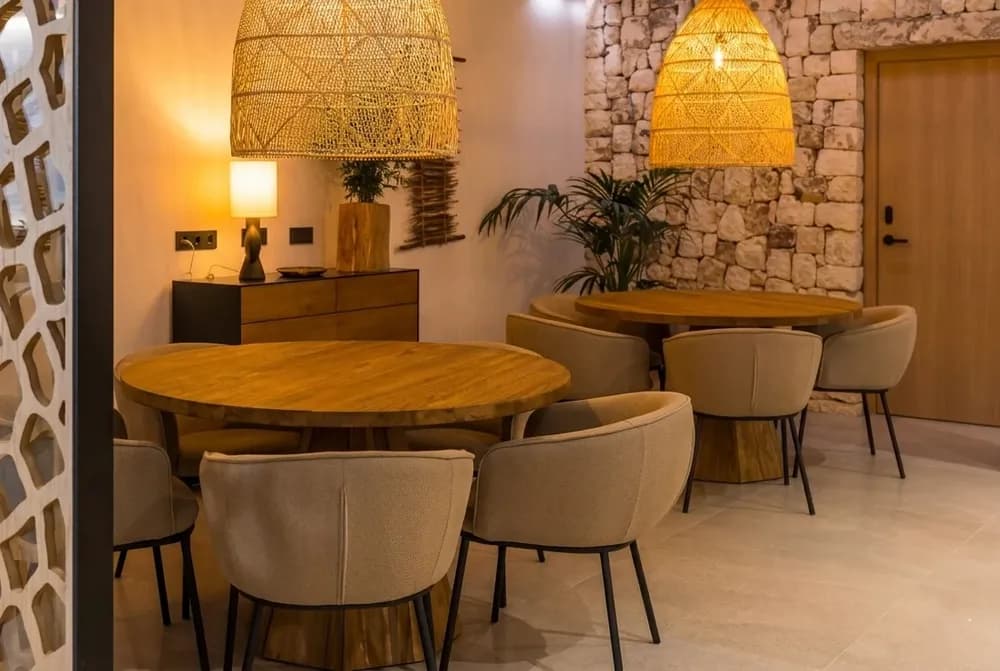
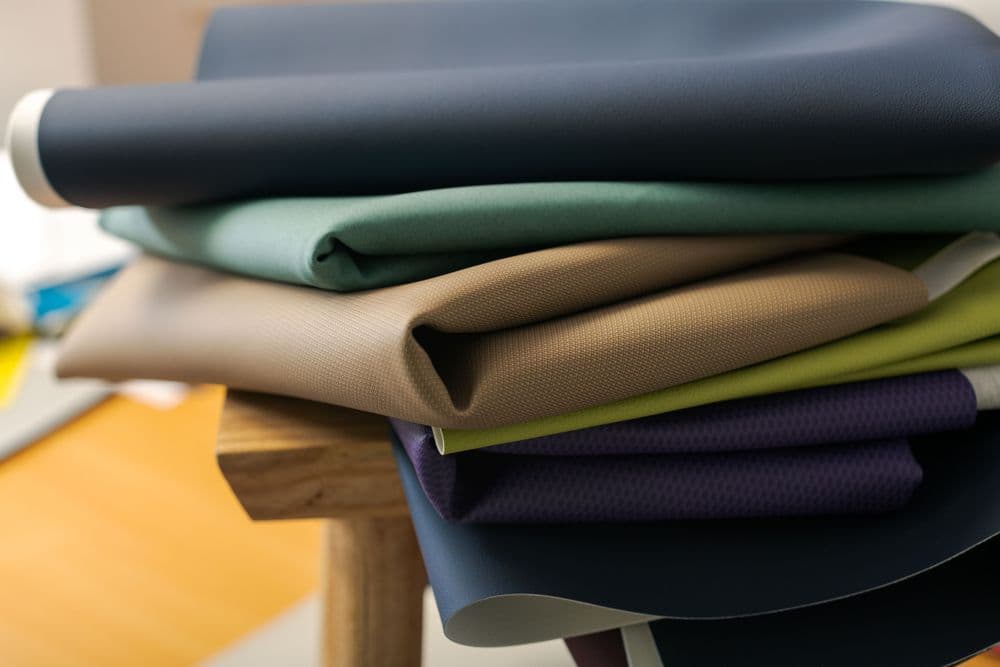
When these details are considered early, upholstery becomes more than a surface choice. It helps define the atmosphere of a space, how it feels in use, and how well the original design idea carries through to installation.
Here, we look at how careful material specification helps protect design intent from first sample to the finished seating.
Table of contents
- Why the swatch is only the beginning
- Where design intent gets lost
- Clarity at the point of specification
- What the material needs to prove
- Performance without visual compromise
- From sample to installation
- The Ambla perspective
- FAQs
Why the swatch is only the beginning
Every interior begins with intent: colour, texture, finish, proportion and atmosphere. A material sample is often the first physical expression of that idea, giving a scheme something tangible to respond to.
A swatch helps test a material against the wider palette for the location. Everything from wood, metal, paint, flooring, and lighting affects how a surface is read. A tone that feels warm in the studio may appear cooler under different lighting. A subtle grain may become more pronounced across a long run of seating. A finish that feels quiet in isolation may take on more presence when placed beside harder architectural materials.
This is why the sample should not be treated as a separate decision from the rest of the scheme. It is part of a chain. Once a material moves from the moodboard to client approval, procurement, upholstery and installation, the original idea has to be carried through each stage with care.
The swatch begins the conversation. But the full specification keeps the vision intact.
Where design intent gets lost
Design intent is rarely lost in one obvious decision. More often, it is diluted through a series of small compromises over time.
When a preferred material becomes unavailable, a close alternative is selected. A texture is changed without regard for its scale of impact. A colour is matched quickly, but not checked against the full palette. A late substitution solves one practical issue but creates another impactful visual one.
Each change will typically seem minor in isolation. Together, they can start to shift the character and intent of a space.
Upholstery has a quiet but powerful effect on an interior. It can soften a hospitality setting, add warmth to a workplace, or make a healthcare environment feel more considered and comfortable. Change the upholstery, and the atmosphere changes with it.
Protecting design intent means thinking beyond the first visual approval. It means understanding how the material will behave once it is cut, stitched, shaped, cleaned, used and seen at scale.
Clarity at the point of specification
A sample only helps if it can be trusted. Colour, texture and finish need to be clearly represented from the first review through to final installation.
That clarity matters because a material often passes through several hands before it becomes part of the finished space. It may be reviewed in a studio, approved by a client, checked against technical requirements, ordered, upholstered, installed and maintained. At each stage, vague information creates room for error.
A good specification removes unnecessary interpretation. It makes clear what the material is, how it performs, where it is suitable, and what needs to be checked before it is committed to a project.
Technical information has an important role here, but it should not feel detached from the design decision. Fire safety, cleanability, durability and availability need to be understood early, before a material becomes embedded in the scheme. When these considerations are left until later, the risk of compromise increases.
The strongest specifications bring the visual and practical requirements together. They support the space's look while ensuring the material is suitable for the setting it will be used in.
What the material needs to prove
A performance material has to do more than look right on a sample card.
It needs to hold its character across scale. It needs to work with stitching, curves, foam and seat shape. It needs to retain enough consistency for repeat use across multiple pieces, while still offering the depth and texture that made it attractive in the first place.
It also has to respond to the realities of use. Seating may be cleaned regularly, used heavily, exposed to changing light, or expected to meet specific safety and hygiene requirements. These demands are a primary consideration during specification and should remain part of the core considerations.
The best fabric specification decisions happen when appearance and performance are considered together as a joined-up compromise. A material should support the original design language while withstanding the environment for which it has been chosen.
Performance without visual compromise
In a well-specified interior, performance should not interrupt the design language.
Durability, cleanability and compliance are essential in many commercial and public settings, but they should not flatten the look or feel of a scheme. A material still needs to offer colour, texture, comfort and presence. It still needs to contribute to the atmosphere of the room.
The best performance materials do their job without drawing attention. They withstand the demands placed on them while maintaining the broader design intent.
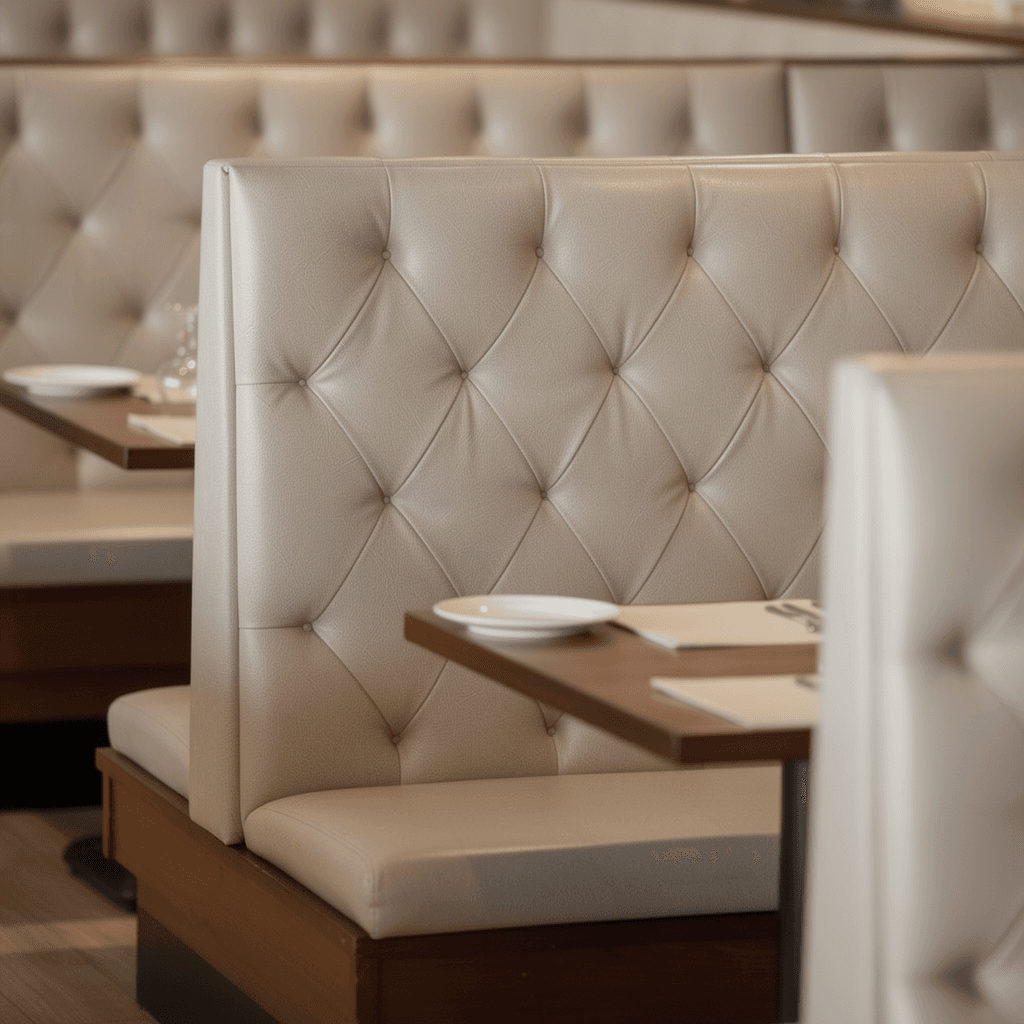
This is especially important in spaces where the material must feel both considered and practical. A healthcare seat can be easy to clean without feeling clinical. A hospitality restaurant can be durable without looking heavy. A workplace booth can feel soft and refined while still being suited to frequent use.
Performance and aesthetics should not sit on opposite sides of the decision. In good material specifications, they support and complement each other.
From sample to installation
The distance between the sample and installation is where many material decisions are tested.
A swatch may confirm the direction, but the finished result depends on how that material behaves in context. Scale, lighting, construction, and surrounding finishes all affect each other. So do stock availability, production consistency, technical documentation and communication between the people involved.
This is why early clarity matters the most. When the material and its specifications are fully understood from the beginning, there is less pressure to make rushed decisions later if something is missed. The scheme has a stronger chance of moving from concept to completion without losing its character, as thinking ahead allows materials to be pressure-tested against any requirements beyond the visual.
A finished seat should feel connected to the first sample that inspired it, be remain faithful to the same design intent: the same tone, the same surface quality, the same role within the space. That level of continuity is what a good specification protects.
The Ambla perspective
As a British manufacturer of high-performance coated fabrics, Ambla understands the distance between sample selection and finished installation.
Colour, texture, durability and practical performance need to work together, not as separate decisions. A material has to be visually considered, technically reliable and suitable for the way the space will be used.
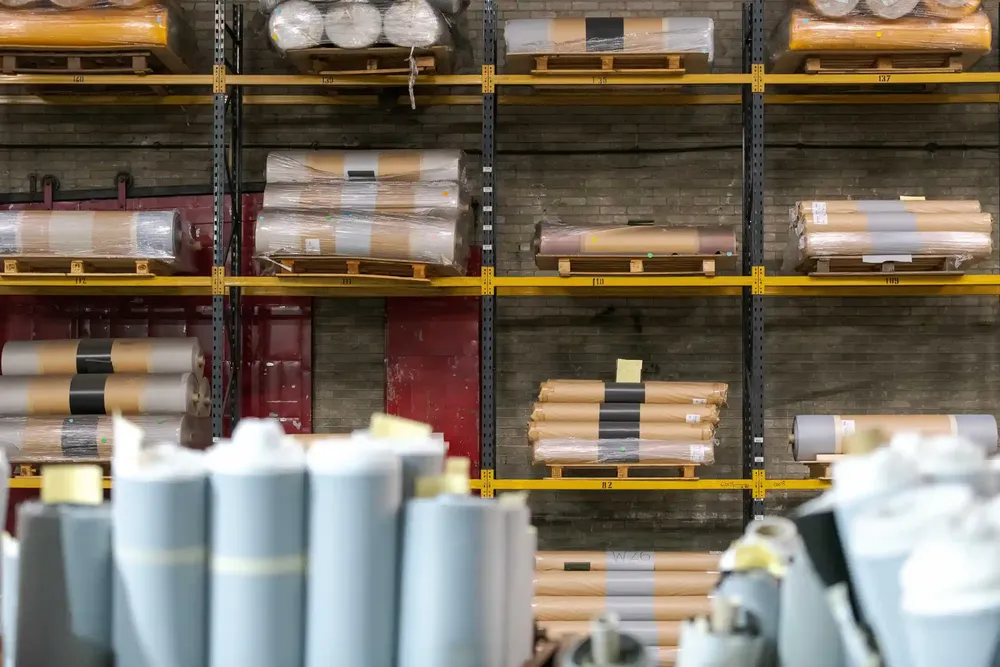
Ambla materials are developed with that balance in mind. Produced in Lancashire, they combine the resilience expected from performance upholstery with the comfort, colour and texture needed to support considered interiors. The aim is not simply to provide a surface, but to help projects stay closer to their original design intent.
From the first sample to finished seating, the right material should do its work quietly: supporting the scheme, standing up to use, and allowing the design idea to remain intact.
FAQs
Why are upholstery samples important?
Upholstery samples help show how colour, texture, finish and scale may behave before a material is specified across a wider scheme. They give a physical reference point for reviewing the material alongside other finishes.
Can upholstery look different once installed?
Yes. Lighting, surrounding materials, seat shape, stitching and the size of the upholstered area can all affect how a material appears. This is why samples should be reviewed as part of the wider design process, not in isolation.
What should a performance upholstery material prove?
It should support the intended look and feel of the space while meeting the practical demands of the setting. Depending on the project, this may include durability, cleanability, flame-retardancy requirements, hygiene considerations or long-term appearance retention.
How can I protect design intent during specification?
Design intent is protected by confirming appearance, performance, availability, and technical requirements as early as possible. Clear specification reduces the risk of late substitutions or compromises that could affect the finished space.
Where does Ambla fit into design-led specification?
Ambla makes British-made coated fabrics that bring together colour, texture, durability and practical performance. Its materials are designed to help interiors retain their intended character from first sample through to finished installation.