How to choose the right upholstery fabric for your project
Vinyl-coated fabrics are widely used across sectors such as healthcare, hospitality, and transport because they are durable and easy to clean. But not all coated fabrics handle installation the same way.
When selecting upholstery fabric, appearance and durability are often the first considerations. For upholsterers, however, handling characteristics are just as important.
Being able to cut accurately, having the right stretch, and feeding fabric smoothly through the sewing machine all help upholsterers work faster and get a neat result. If the material is tricky to handle, it can slow you down, waste fabric, and make it harder to finish the job well.
That’s why most upholsterers pick fabrics that are easy to handle, behave the same every time, and last.
Vinyl-coated fabrics are widely used across sectors such as healthcare, hospitality, and transport because they are durable and easy to clean. But not all coated fabrics handle installation the same way.
Understanding how a fabric cuts, stretches, and stitches helps upholsterers choose the best vinyl for their work.
Cutting: Why clean cutting matters
If a fabric is unstable or difficult to control, upholsterers may experience problems such as:
- Uneven panel edges
- Distortion while cutting
- Excess trimming during assembly
- Unnecessary material waste
Most commercial vinyl upholstery fabrics have a stable backing that keeps tension even and lets you get clean, controlled cuts with regular tools.
Clean cuts matter most when you’re making a batch of seat panels. Straight, even edges make it much easier to line up seams and keep everything looking even.
If you’re working on a big project or repeating the same seat, fabric that cuts cleanly saves time and keeps things moving.
Stretch: Getting the right amount of give
How much a fabric stretches is another key factor to consider when choosing upholstery material.
Most upholstery work means wrapping fabric around curves or awkward shapes. If the material is too stiff, it becomes difficult to tension smoothly. If it’s too stretchy, it loses its shape or gets wavy when you fit it.
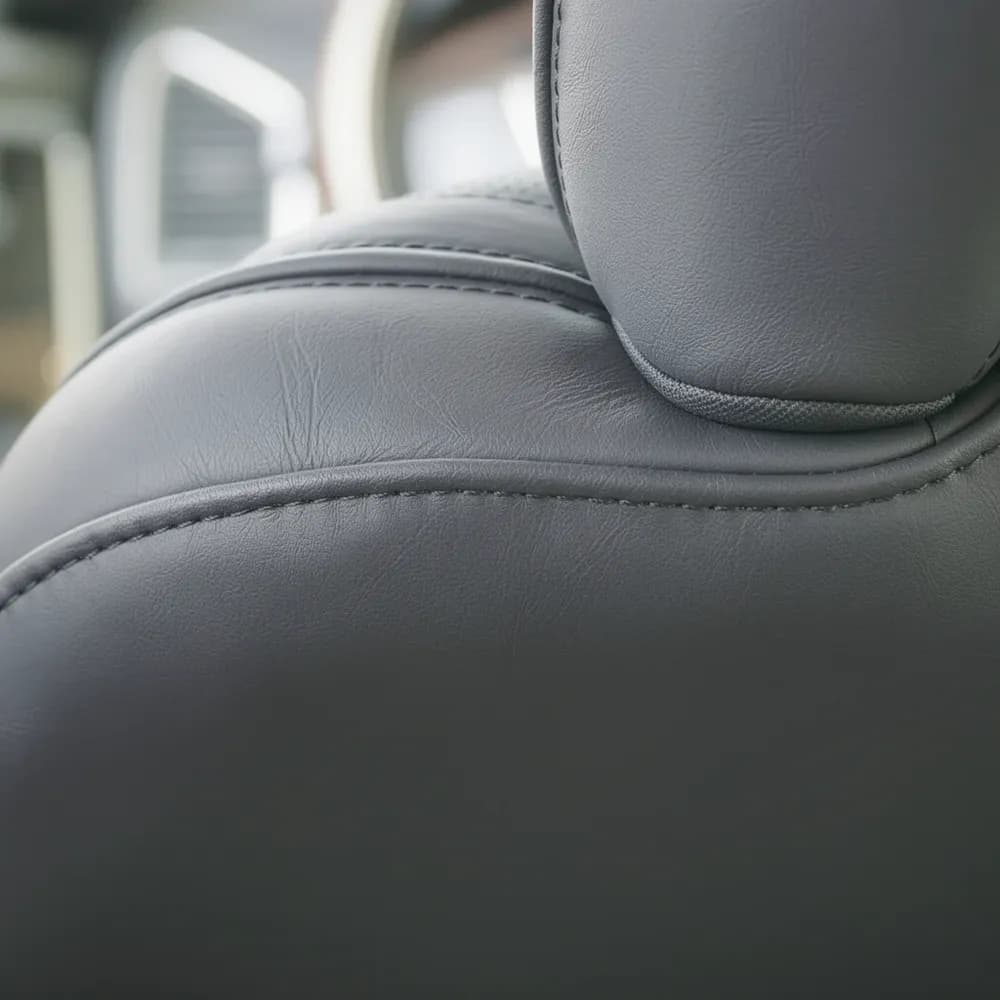
A good vinyl is flexible enough to shape over foam and frames, but stable enough to hold its form once it’s on.
This balance is especially important on seats with tight curves, rounded backs, or panels that need to line up. Controlled stretch lets you pull the fabric tight without wrinkles or distortion.
Stitch behaviour: How fabric performs under the needle
You also need to think about how the fabric acts when you’re stitching. Some drag or get stuck in the machine. Others stretch too much under the needle, so seams go crooked.
A good vinyl should feed smoothly through the sewing machine and keep seams strong. A steady backing helps the needle go through evenly and keeps the stitch line straight.
When the stitching goes well, this supports clean, consistent seam lines, which is especially important if the seams are part of the look.
Fabrics that stitch well help you avoid puckered seams, needle issues, and wasted material from mistakes.
If you’re on a tight deadline, fabric that stitches predictably keeps the workshop running smoothly.
Bench feedback: What upholsterers notice first
Most experienced upholsterers know if a fabric is good within the first few minutes of working with it.
When testing a fabric, upholsterers often ask themselves a few practical questions:
- Does the material cut cleanly without dragging or distorting?
- Does it stretch enough to form around corners without wrinkling?
- Does it feed smoothly through the sewing machine?
- Does it hold its shape once installed?
When a fabric does well in all these areas, you can work faster and focus on getting a great finish instead of fixing problems.
Reliable fabrics also mean you’re less likely to redo work, which matters a lot on commercial jobs where time and materials cost money.
For most upholsterers, the best vinyl is the one that works the same way every time, from start to finish.
Choosing the best vinyl for upholsterers
Durability, cleanability, and meeting industry standards are still important. But you also need to think about how the material handles when you’re actually using it.
Fabrics designed for both performance and easy handling usually deliver the best results in real jobs. When evaluating vinyl upholstery fabrics, upholsterers often look for materials that provide:
- Stable backing for clean cutting
- Controlled stretch for shaping and tensioning
- Consistent stitch performance
- Predictable handling during installation
These features make sure the fabric is not just tough, but also easy to work with on the bench.
Usually, the most reliable upholstery fabrics are made for tough commercial jobs, where you need both durability and consistency.
FAQs
What is the best vinyl for upholsterers?
The best vinyl for upholsterers is one that’s both durable and easy to work with. Fabrics that cut cleanly, stretch evenly, and stitch smoothly usually give the most reliable results.
What makes an upholstery fabric easy to work with?
An easy-to-use upholstery fabric usually has a stable backing, the right amount of stretch, and predictable stitching. These features help upholsterers cut, shape, and sew the fabric efficiently.
Is vinyl upholstery fabric harder to work with than woven fabrics?
Not necessarily. Well-engineered vinyl upholstery fabrics can be very consistent to work with, particularly in commercial upholstery, where durability and stability are important.
Why does stretch matter in upholstery fabrics?
Stretch affects how easily a fabric can wrap around shapes and curves. The right amount of flexibility lets upholsterers pull the fabric tight and keep its shape after installation.
Do all vinyl upholstery fabrics perform the same?
No. Vinyl fabrics can have different coatings, backings, and manufacturing methods. These differences affect how durable, flexible, and easy to handle they are during upholstery work.
Related Products
A considered selection of materials connected to the themes, surfaces or applications explored in this piece.